Home > > Company News
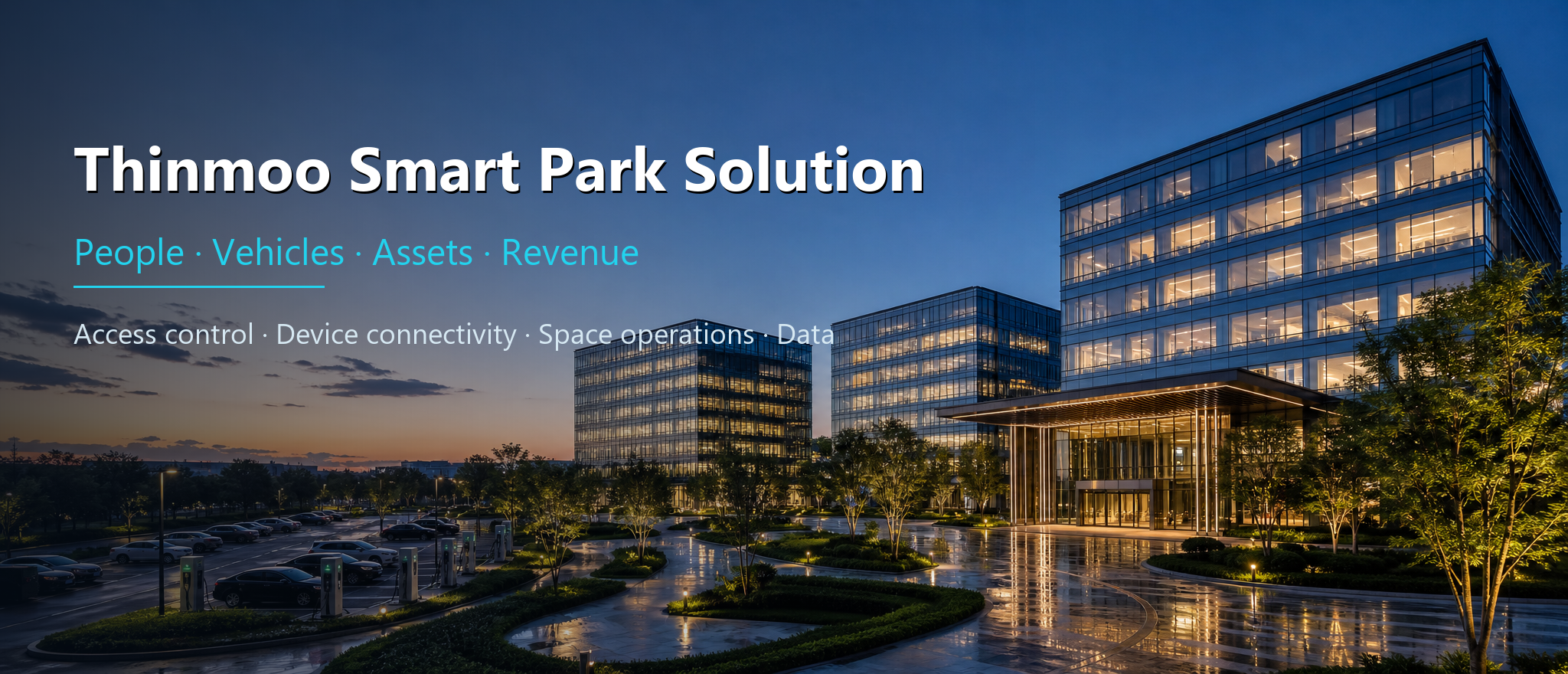
A park platform for access, parking, charging, lifts and billing — connecting people, vehicles, assets and revenue.
A business park is not a residential compound with offices in it. It is an office estate, a retail strip, a dormitory and a transport node at the same time, and each of those has its own access rules, its own billing logic and its own operator. Pedestrian access runs on one system, vehicle access on another, visitor management on a third, charging on a fourth, energy metering on a fifth. Every system has a console and a report, and none of them talks to the others. The more systems a park installs, the less of the whole it can see.
Thinmoo Smart Park Solution starts from integrated hardware and software, and works across four dimensions: perimeter and access security, connected device control, lean space operations, and data-driven decisions. Access, vehicle flow, asset management and revenue end up on the same set of records.
The pain points in a conventional park cluster in three places.
Security systems are fragmented. Pedestrian access, vehicle access and video surveillance are separate builds, so confirming a single incident means checking three interfaces. IoT devices arrive as several platforms — access control, lift control, parking, charging — and their data does not connect; when something goes wrong, someone has to walk to the site to find out what. Space and energy assets are under-monetised: how much a shared facility was used, where the energy went, and what share a tenant is owed are still settled with spreadsheets and manual tallies.
Against these three, the solution works from four dimensions — perimeter and access security, connected device control, lean space operations, and data-driven decisions — and connects access control, video intercom, parking, charging, lift control, visitor management, meeting spaces and property billing. It is compatible with both its own hardware and third-party devices, so people, vehicles, assets and revenue share one set of data rather than four.
(1)Intelligent Access Management for People
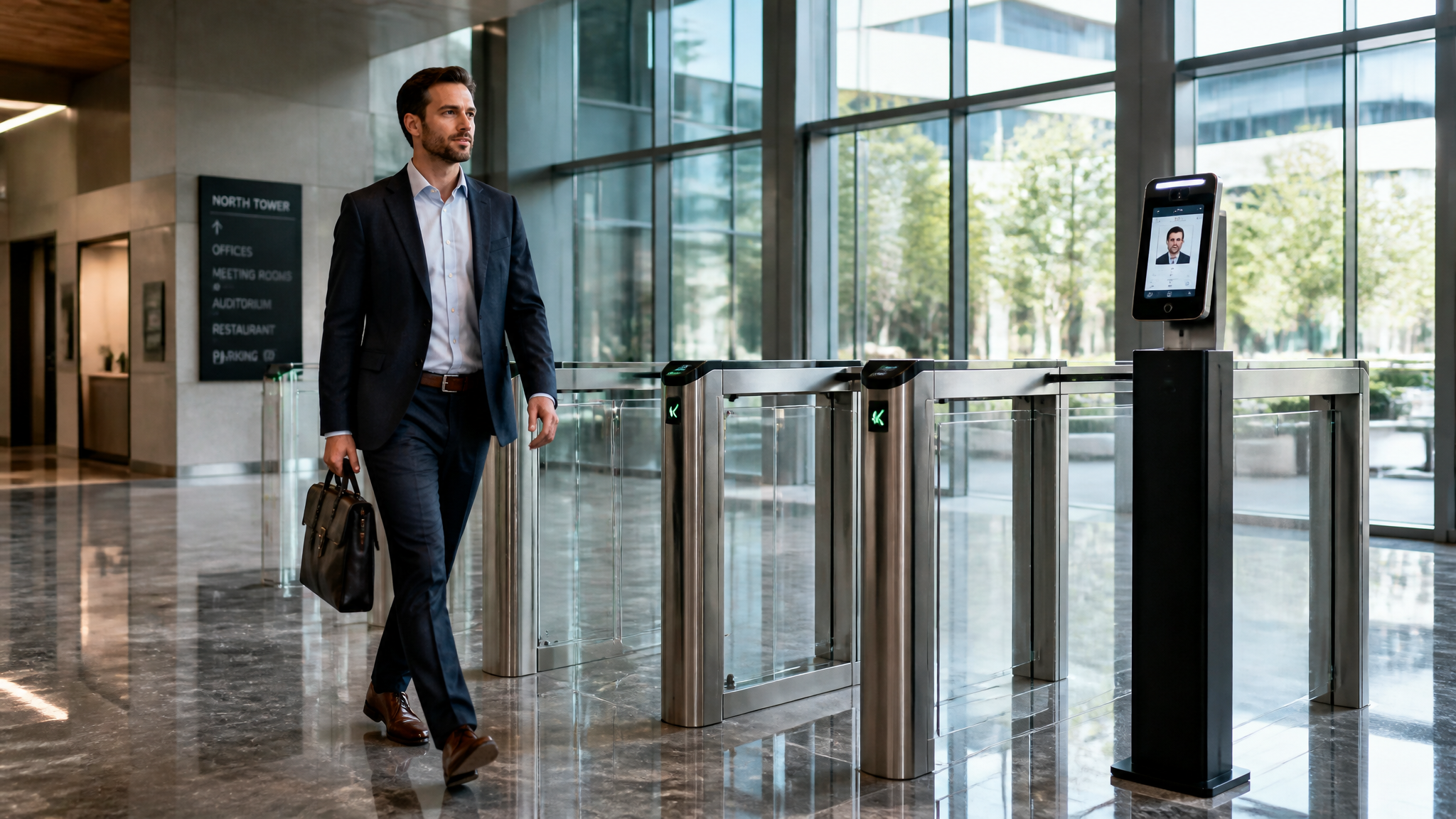
Multiple verification modes: facial recognition, fingerprint, RFID, NFC and QR codes are all supported, and facial verification includes liveness detection so a photograph or a video cannot stand in for a person. Different groups can use different credentials — long-serving staff on cards, visitors on QR codes, resident teams on face — without forcing one method on everyone.
Visitor invitations, end to end online: the host submits the visitor's details, and the system issues access, lift and parking permissions automatically, so the visitor can enter on arrival. Movement can be traced during the visit, and anyone on a blocklist triggers an alert. Compared with a paper register at the front desk, this route keeps who came in, where they went and when they left inside the system.
Access and lift permissions linked: once access verification passes, the lift releases the corresponding floors, and the permission scope matches the person's role — someone who has cleared the lobby cannot reach an arbitrary floor. Remote intercom release covers unstaffed lanes, where verification and opening still have to complete without an operator.
One register for staff, visitors and tenants: all three groups are managed in the same permission structure, so joiners, leavers, permission revocation and visitor authorisation are handled from one entry point instead of three lists maintained in parallel.
(2)Robot Access and Lift Control
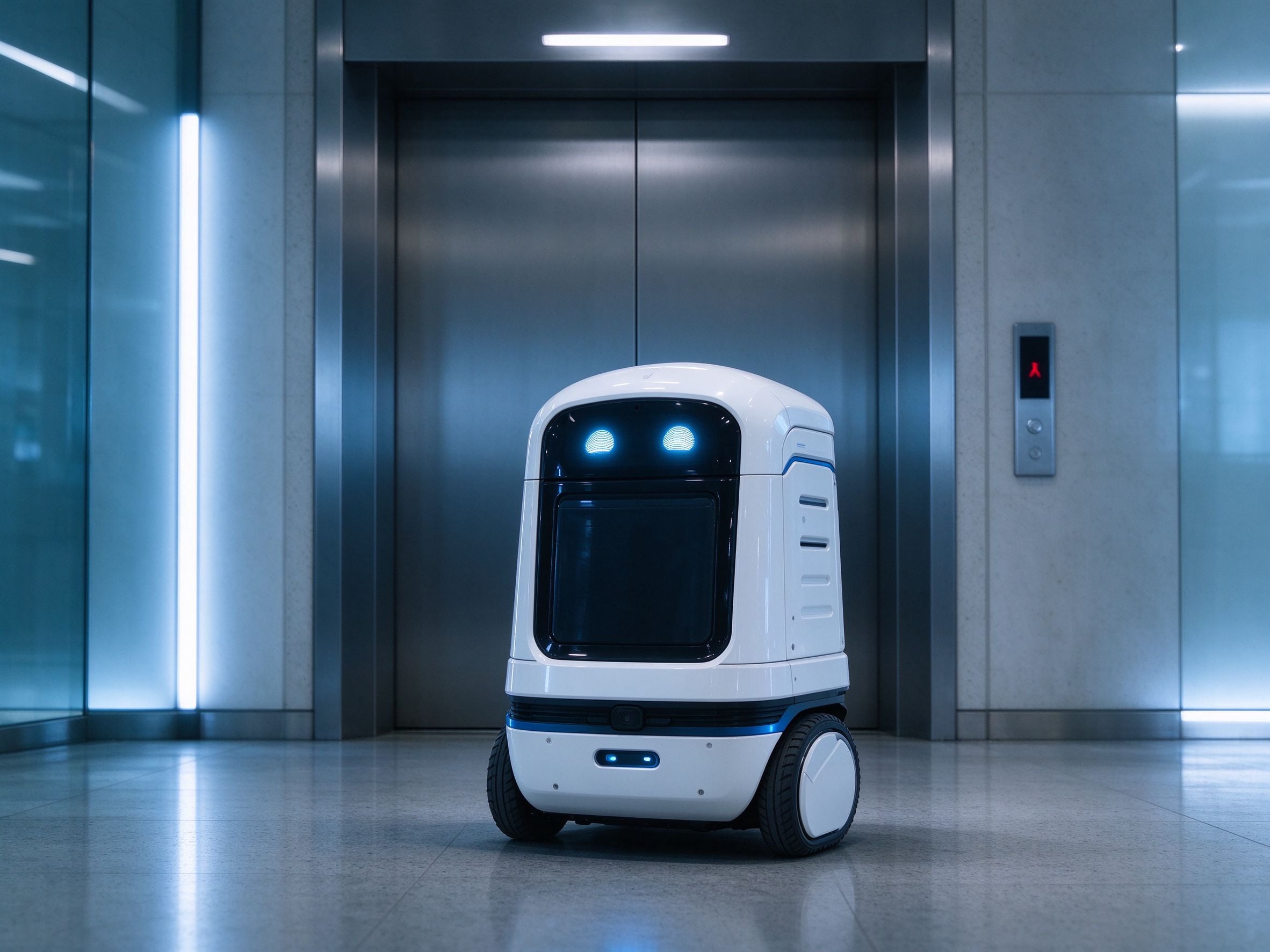
For delivery and patrol robots, the bottleneck inside a park is rarely the road. It is the door and the lift.
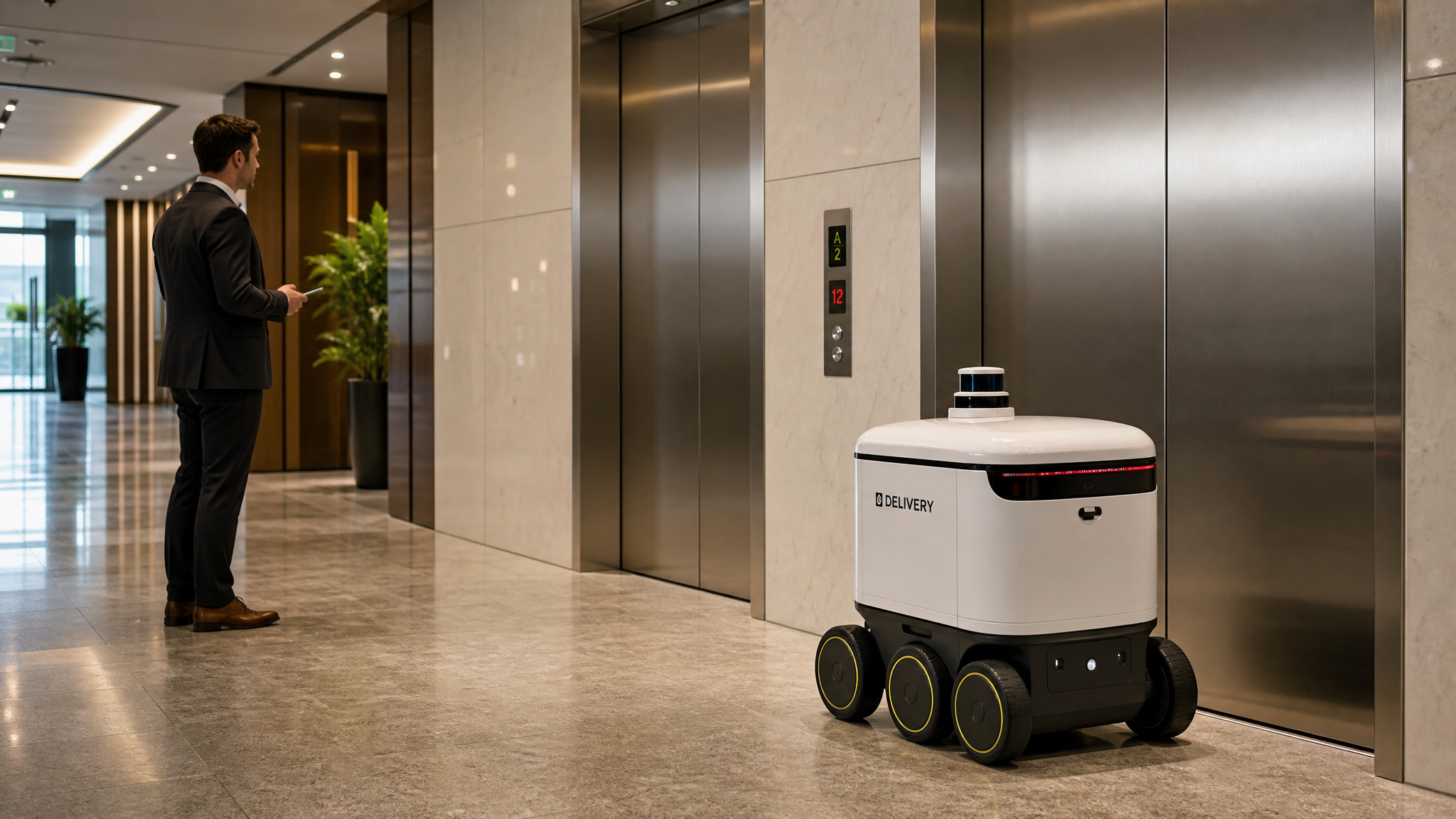
Access release: the robot completes identity authorisation, and the system issues the open command when it reaches the access point. No one has to press a button, and no security post has to be staffed for it.
Lift dispatch: the robot calls a lift on reaching the lift lobby and selects its destination floor once inside. Multi-lift dispatch is supported, so during peak hours the robot does not compete with people for the same car.
Zone permissions: the areas a robot may enter are planned in advance, and restricted zones are excluded. Device permissions follow the task scope, which means an out-of-scope task is stopped at the source rather than discovered halfway.
Status monitoring: read failures, lift unavailability and failed authentication raise alerts automatically. The property team can step in early instead of finding a robot parked in a corridor for half an hour.
(3)Park-wide Revenue Operations
Parks draw income from many sources and keep the books in many places. Consolidating billing and splitting revenue is where operational digitisation begins.
Consolidated billing: property fees, parking fees and energy charges are billed automatically in the system, with online payment supported. Bills and payment records come from the same source, which removes most manual reconciliation.
E-invoicing: invoices can be issued electronically after payment, cutting out printing and posting of paper receipts.
Online contract management: leases, parking bays and advertising positions are managed online, with expiry and renewal dates flagged in advance so nothing lapses unnoticed.
Automatic revenue sharing: income from shared spaces and tenants is split by agreed rules, and multi-party settlement is supported. The park operator and the service operator each see their own share, which makes total park revenue visible rather than inferred.

(4)AI Video Surveillance
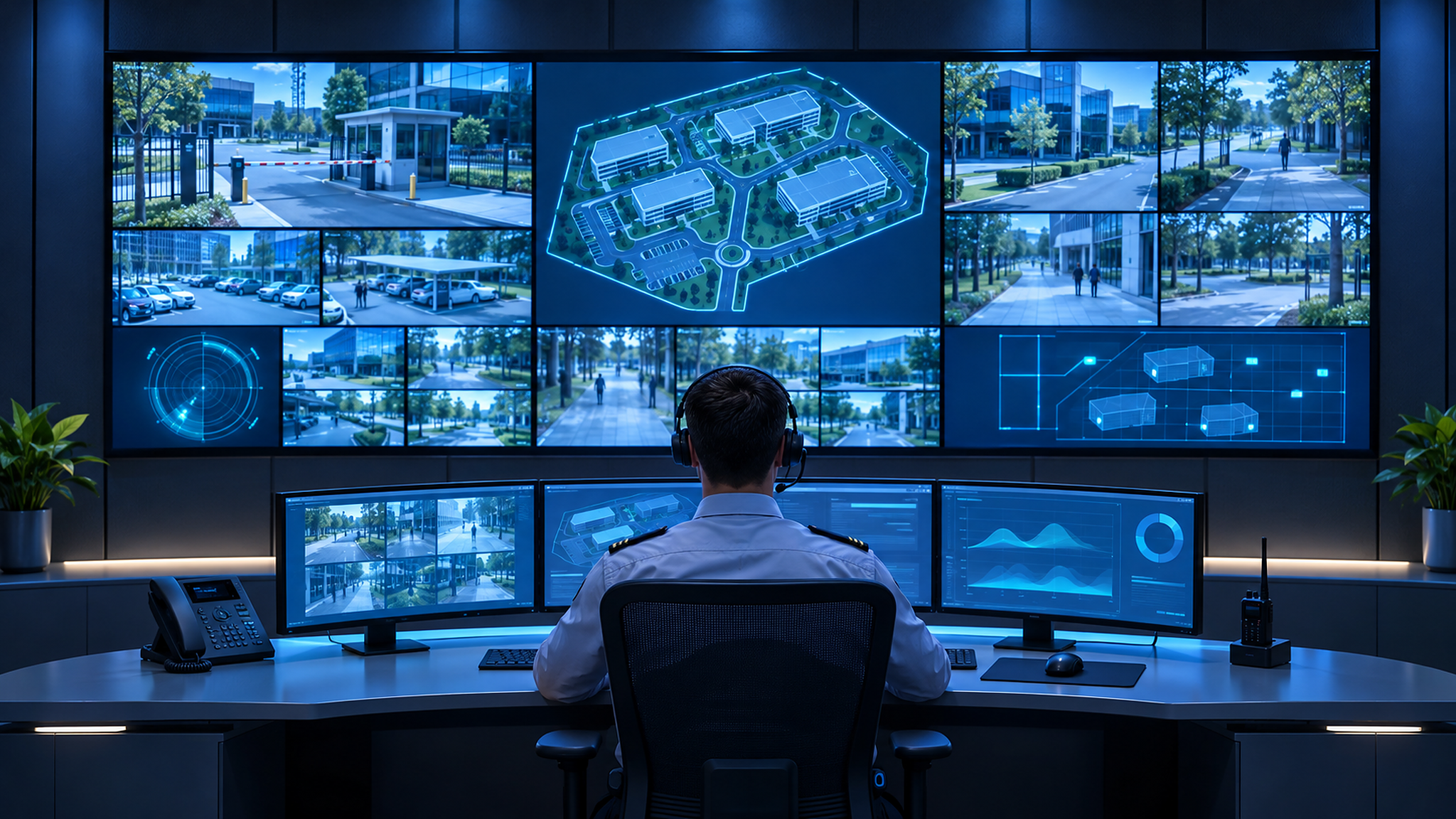
AI video algorithms monitor the park around the clock, identifying fire and smoke, overcrowding or intrusion, and falling objects from height.
Events are pushed to the duty officer in real time, and the system captures and retains the video around each event as evidence for handling and for attributing responsibility. Rules can trigger a work order automatically, so the chain runs from alert to action to closure, and staff are not left reviewing footage after the fact.
Set against a person watching a wall of screens, the value of AI is not that it replaces judgement. It moves seeing forward into being told, so people intervene where judgement is actually needed.
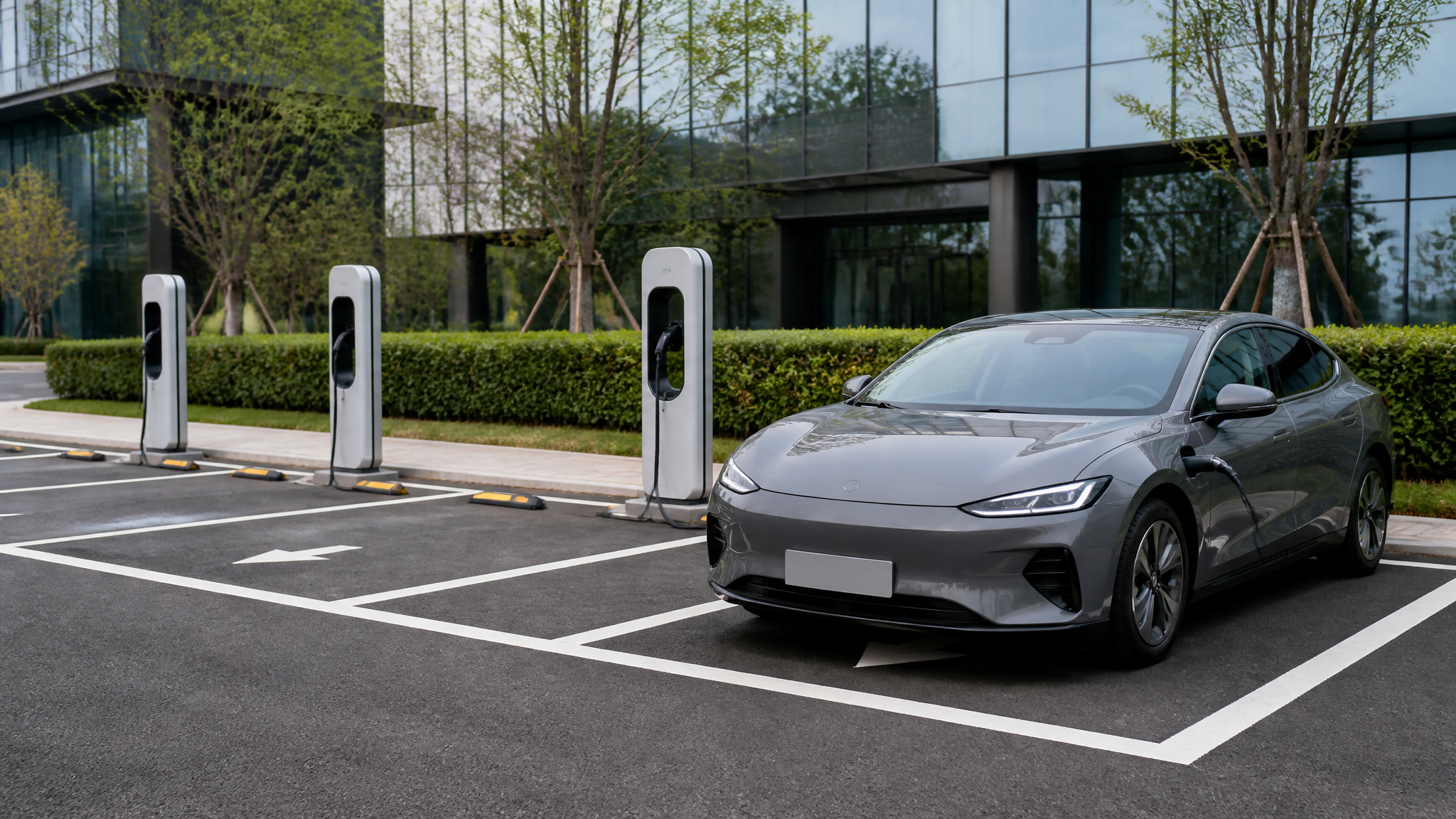
(5)Charging Operations
Charging equipment is monitored for safety in real time. Overload or abnormal temperature rise triggers an automatic cut-off and an alert, which keeps a fault inside a single unit instead of letting it spread.
Scan-to-charge and online settlement are supported, with charging billed on its own line. Charging and parking billing are linked, so a customer does not receive two bills for one visit.
Operations data is managed in one place: the running status, fault history and revenue of each charging site are visible in the same back office, which is what makes both safety control and digital operations possible.
(6)Smart Vehicle Access Management
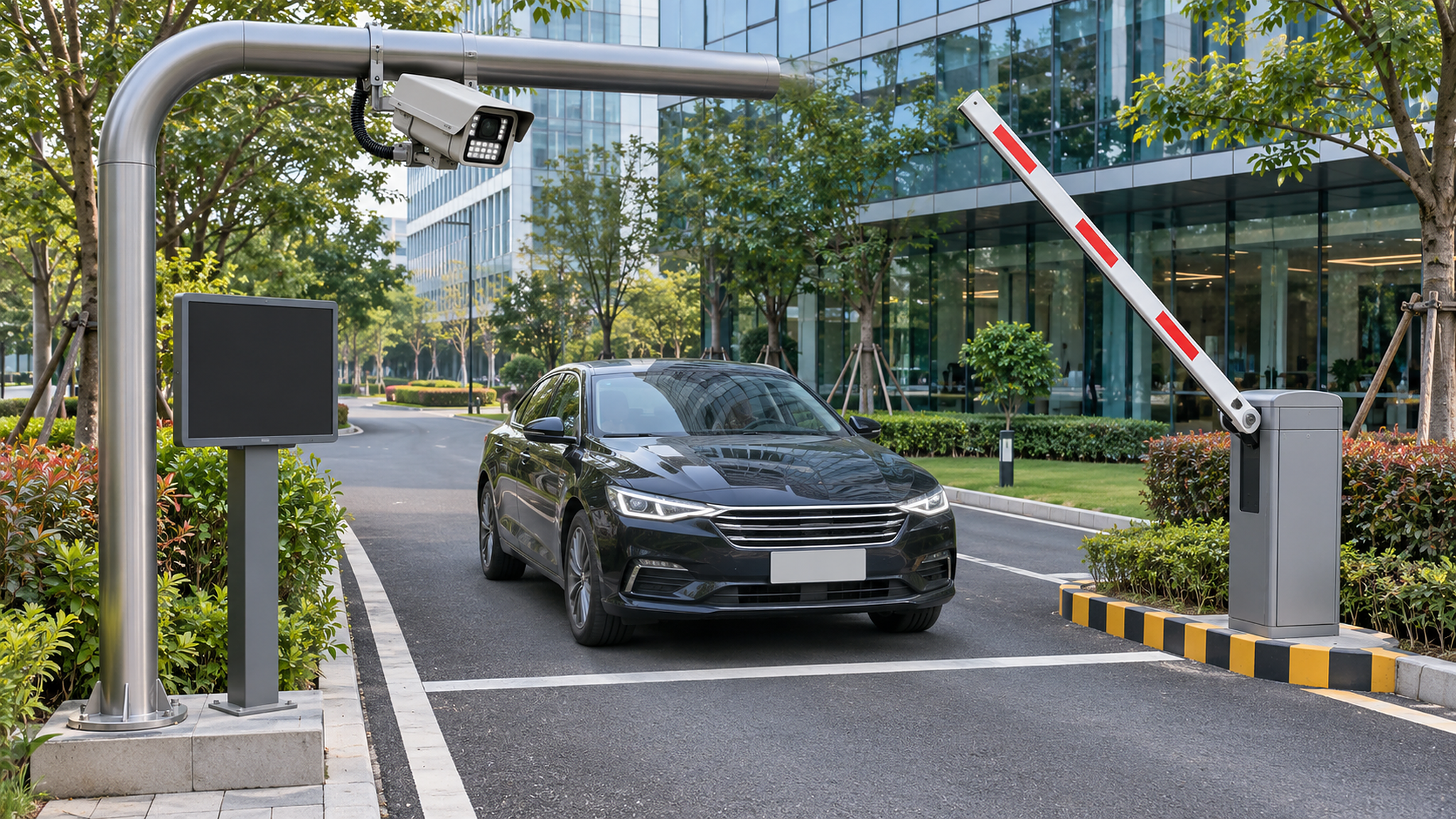
Plate recognition at 5-megapixel-class resolution is paired with AI correction of similar characters, which improves accuracy on damaged plates and on characters that look alike. Vehicles without plates can pass on a QR code, so exceptions do not stall the lane.
Twenty-four billing templates cover monthly cards, packages and short stays, and rules can be configured per site. Parking and charging are billed together rather than twice.
A vacancy display guides vehicles in, and cloud-based management lets several car parks run from one console. That reduces the staffing needed at each booth, and gives head office a single view of how each site is performing.
(7)Facial Recognition Access at Rail Stations
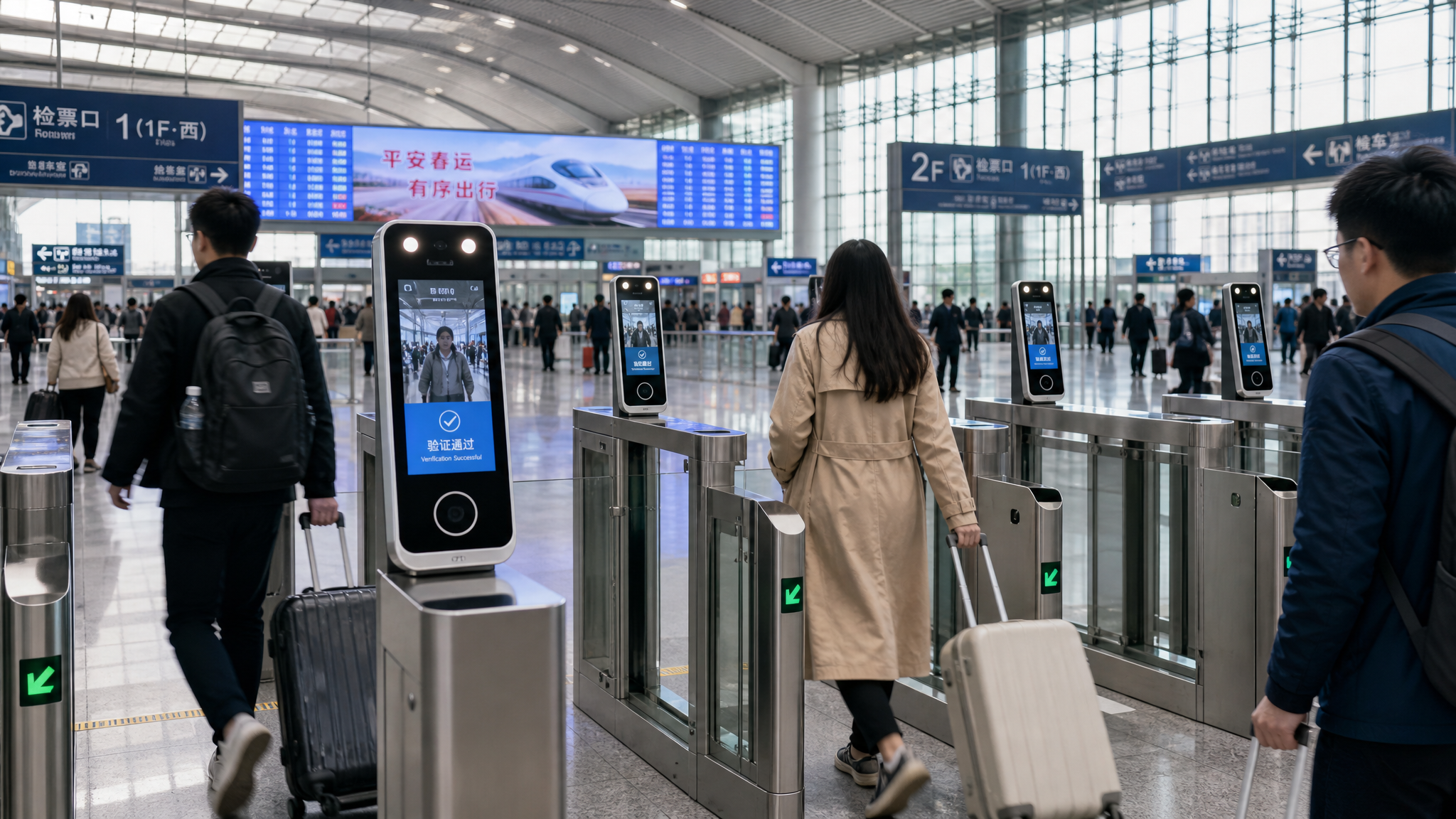
A transport hub asks more of access control than a park does. Density is higher, verification has to be faster, and anomalies have to surface earlier.
Facial recognition verifies people entering, leaving and passing through the gate line, and compares them against watchlists. Persons of interest are intercepted and flagged in real time, which moves verification from after-the-fact investigation to the moment of passage.
Tailgating and prolonged loitering raise alerts, and an alert can generate a handling work order whose outcome is archived. That closes the event properly and lifts the public-security capability of the hub.
(8)Space Assets, Shared Spaces and Dormitory Management
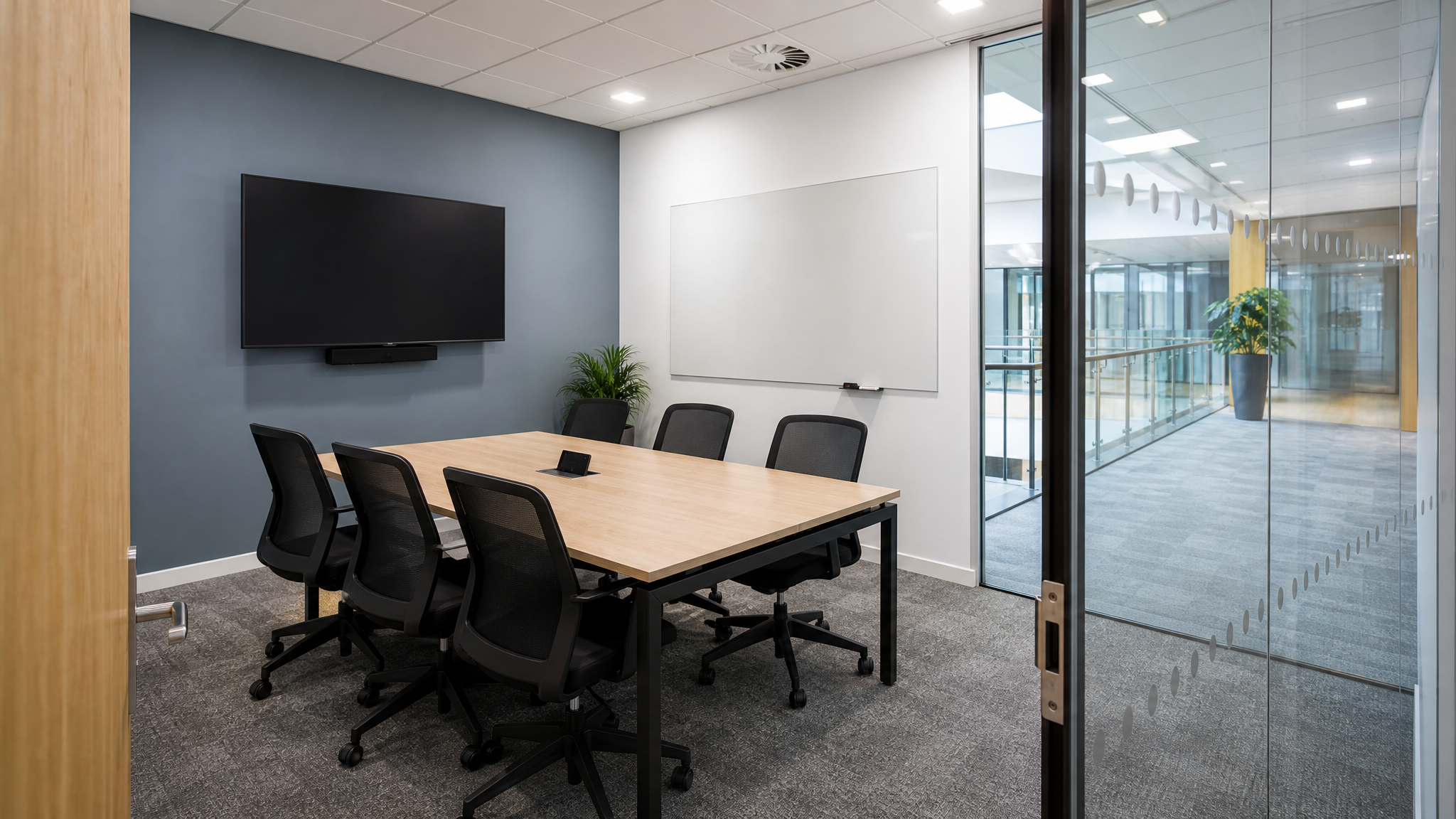
Space assets are managed digitally: room status, floor area, occupying party and contract status are all visible in one place.
Shared spaces can be booked online. Once a booking is approved, access permission for that time slot is issued automatically and reclaimed when the slot ends, so nobody has to unlock a door or hand over a key. Dormitories follow the same rule: check-in, check-out and changes of occupant are synchronised in the system, which prevents the familiar situation where a person has left but their access has not.
Usage records build up as a ledger. How often a shared facility is used, and how often it sits idle, becomes a matter of record — useful for reactivating underused space, and for giving dormitory allocation a defensible basis.
(9)Energy Management
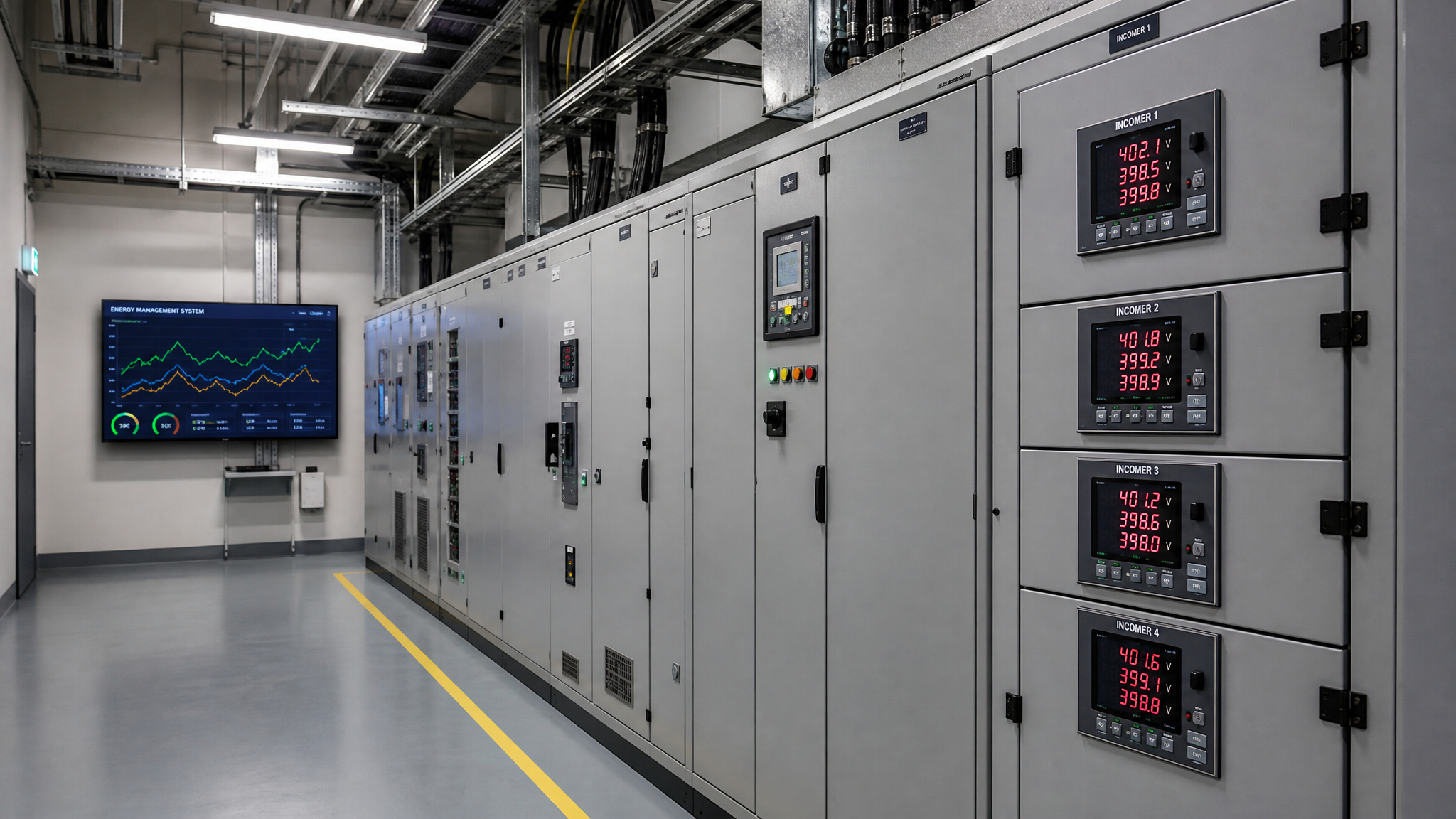
Energy data is collected from equipment across the park in real time and tallied by category, so water, electricity, air conditioning and lighting each have their own account instead of waiting for a monthly manual reading.
Abnormal consumption raises an alert, which means leaks and equipment running idle are caught in the current period rather than at quarterly reconciliation. Once the data has accumulated, retrofit decisions have a baseline to compare against, energy use can be managed at a finer grain, and operating cost becomes something the park can actually steer.
Our professional sales team are waiting for your consultation.
 EN